

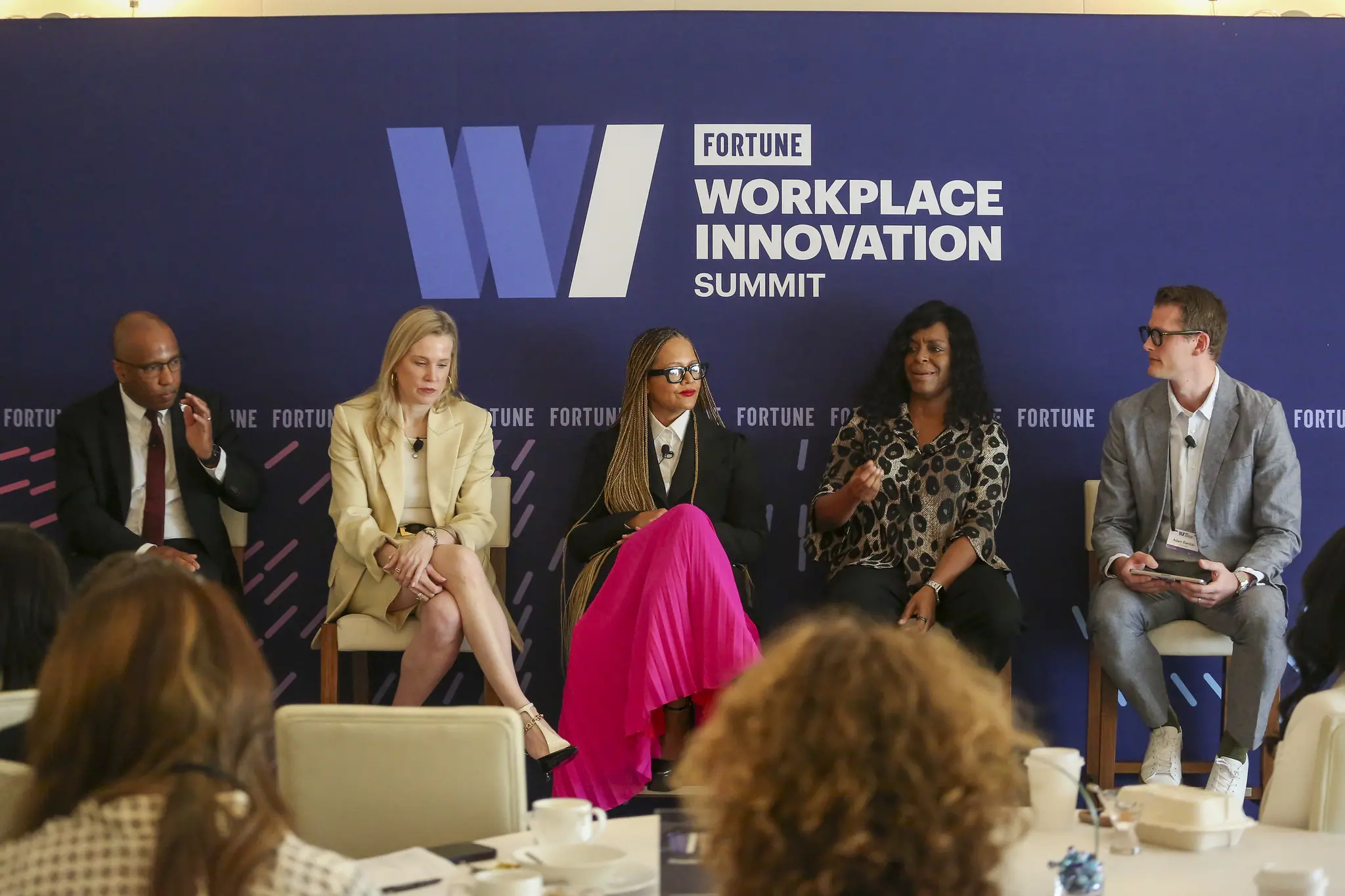
Debbie Dyson recently joined a Fortune Workplace Innovation Summit panel discussion titled Beyond the Diploma: Skills That Actually Get Graduates Hired. The conversation brought together leaders across workforce development, higher education and enterprise HR to examine what it now takes for graduates to get hired and navigate an evolving workforce.
The Entry-Level Job is Changing
Among the clearest themes from the discussion: the traditional pathways into the workforce are shifting faster than many employers, educators and students are prepared for.
“The entry-level jobs have elevated,” Dyson said during the panel. “And so the new entry-level job is now what used to be the mid-level job.”
Dyson pointed to a growing challenge facing employers and early-career talent alike: many of the roles that historically allowed workers to build experience through observation, repetition and on-the-job learning are changing or disappearing as AI reshapes work.
Employers are Looking Beyond Technical Skills
The discussion also reinforced that employers are evaluating talent more broadly than technical qualifications alone. Panelists explored broader questions around interviewing, candidate readiness, internships and employer-education partnerships, highlighting the growing importance of practical experience and human-centered capabilities in a rapidly changing workplace.
Dyson emphasized that employers are increasingly evaluating candidates beyond technical qualifications alone, pointing to the growing importance of durable skills such as communication and critical thinking, alongside cultural alignment. She noted that cultural fit is often the differentiator when employers assess long-term success.
When asked which skill graduates should prioritize most over the next five years, Dyson pointed to critical thinking, while other panelists emphasized adaptability, communication and storytelling, reinforcing the growing importance of human capabilities as work continues to evolve.
Keeping Humanity at the Center of AI
The conversation also surfaced broader questions about AI-driven hiring systems and the changing candidate experience. Dyson emphasized that even as AI reshapes work and hiring, employers cannot lose sight of emotional intelligence and the distinctly human capabilities that technology cannot replace.
Reasons for Optimism
The discussion reinforced how quickly workforce expectations are changing for employers, educators and early-career talent alike. But amid the disruption, panelists also pointed to reasons for optimism: human adaptability, judgment and connection remain essential as organizations navigate workforce transformation.
Read the full article originally published by Fortune and syndicated by Yahoo Finance: Beyond the diploma: Skills that actually get graduates hired